


What is medical waste?Medical waste is waste generated from the operation of medical facilities, including hazardous medical waste, ordinary solid waste, exhaust gas, non-hazardous liquid waste and medical wastewater.
How many types of medical waste are classified?
Pursuant to Article 4 of Circular 20/2021/TT-BYT, identifying medical waste, specifically:
Hazardous medical waste includes:
+ Infectious waste
+ Non-infectious hazardous waste.
(1) Infectious waste includes:
– Sharp infectious waste includes needles, syringes, needles, needles, needles, puncture needles, acupuncture needles, scalpel blades, nails, surgical saws, syringes, glass fragments broken glass, other sharp objects that have been discarded, are sticky, contain the blood of the body or contain pathogenic microorganisms;
– Non-sharp infectious waste includes cotton, bandages, gauze, gloves, other non-sharp wastes that absorb, stick, contain the blood of the body, contain pathogenic microorganisms; vaccine vials of inactivated or attenuated vaccines; liquid infectious waste (including drainage after surgery, medical procedures, waste fluid containing human blood or containing pathogenic microorganisms);
– Wastes with high risk of infection include patient samples, containers, sticky samples, waste contaminated with patient samples discarded from laboratories of biosafety level II or higher; wastes generated from isolation wards, isolated treatment areas, and areas for taking samples for testing of patients with dangerous infectious diseases of groups A and B;
– Anatomical waste includes discarded human tissues, organs, and laboratory animals;

(2) Non-infectious hazardous waste includes:
– Discarded chemicals with hazardous ingredients and properties exceeding the hazardous waste threshold or with a hazard warning on the package from the manufacturer;
– Discarded pharmaceuticals belong to the group of cytotoxic or have a hazard warning on the package from the manufacturer;
– Bottles, vials of drugs or chemicals, tools that are contaminated with drugs or chemicals of the cytotoxic group or have a hazard warning on the package from the manufacturer;
– Discarded, broken, damaged or used medical equipment containing mercury, cadmium (Cd); discarded batteries and accumulators; lead-coated materials used in the prevention of radioactive waste;
– X-ray film washing solution, wastewater from testing and analytical equipment and waste solutions with hazardous elements exceeding the hazardous waste threshold;
– Other medical wastes with hazardous ingredients and properties exceeding the hazardous waste threshold or with a hazard warning from the manufacturer.
(3) Ordinary solid waste includes:
– Daily-life solid waste arising from daily activities of medical staff, patients, family members, students, visitors to work and external wastes in medical establishments (except solid waste). domestic waste generated from isolation and treatment areas for people with dangerous infectious diseases);
– Discarded chemicals have no hazardous components or properties exceeding the hazardous waste threshold;
– Bottles, bottles containing drugs or chemicals, tools with drugs or chemicals that are not in the cytotoxic group or have no hazard warning on the package from the manufacturer;
– Discarded vaccine vials that are not inactivated or attenuated vaccines;
– Non-infectious, non-infectious, non-hazardous sharp waste that exceeds the hazardous waste threshold;
– Infectious waste after being treated meets the national technical regulations on environment;
– Waste sludge from the wastewater treatment system has no hazardous components or properties exceeding the hazardous waste threshold; ash and slag from medical solid waste incinerators have no hazardous ingredients or properties exceeding the hazardous waste threshold;
– Solid wasteoften other;
– The list of ordinary solid waste that is allowed to be collected for recycling purposes is specified in Appendix No. 01 promulgated together with Circular 20/2021/TT-BYT.
(4) Emissions include emissions from the laboratory of dangerous infectious disease agents, transmitted through the air; emissions from biosafety level III or higher laboratories.
(5) Non-hazardous liquid waste includes drug solutions, discarded chemicals that are not in the cytotoxic group, have no hazard warning from the manufacturer, do not contain excess hazardous elements, do not contain micro-organisms. disease-causing organisms.
(6) Medical wastewater includes wastewater generated from professional activities in medical establishments. In case domestic wastewater is discharged into the medical wastewater collection system, it shall be managed as medical wastewater.

The danger of medical waste.
Hazardous medical waste is waste containing elements hazardous to human health and the environment such as infectious, toxic, radioactive, flammable, explosive, corrosive or other hazardous properties. if these wastes are not completely destroyed.
Hazardous medical solid wastes include: sharp infectious waste (needles, needles, infusion lines, scalpel blades, scalpels, saws, syringes, broken glass and other objects) other sharps), non-sharp infectious waste (cotton, bandages, gauze); potentially infectious waste (patients and contaminated containers); anatomical waste (tissues, organs, human organs, placenta, fetus); hazardous chemical waste (outdated, poor quality pharmaceuticals that are no longer usable, hazardous chemicals for medical use), waste containing heavy metals (mercury from thermometers, sphygmomanometers) broken)…
Hazardous medical liquid wastes are generated from professional activities (from operating rooms, laboratory tests, etc.) and activities of hospital staff, patients and caregivers (from restrooms). birthing, washing, from cleaning rooms). For hospital wastewater, in addition to the usual pollutant factors such as organic matter, animal and vegetable fats and oils, common bacteria, there are also specific organic and mineral contaminants such as pathogenic bacteria, drugs, disinfectants, chemical solvents, drug residues, antibiotics, radioisotopes used in diagnostic and therapeutic processes.
Ordinary medical waste (or non-hazardous waste) is waste that does not contain infectious, hazardous, radioactive, or flammable elements, including: domestic waste generated from hospital rooms. (except for isolation wards); waste generated from medical professional activities (bottles, vials, serum bottles, plastic materials, casts in closed fractures. These wastes are free from blood, biological fluids and hazardous chemicals); waste generated from administrative work (paper, newspapers, documents, plastic bags…); outdoor waste (leaves, garbage in outdoor areas).
Measures to treat medical waste.
(1) Storage and handling
Waste management at source is something that every medical facility needs to do. The management and classification makes it easy for medical staff to sort waste before disposal. This reduces the burden on the medical waste treatment process. The management and classification is not the responsibility of anyone alone. Every healthcare worker or even a patient needs to adhere to the segregation of waste at the source.
Currently, in hospitals or medical facilities, there should be types of trash cans corresponding to the characteristics of waste. Garbage is sorted by color for easier handling. At the same time, the transportation must also comply with clear regulations to ensure safety.
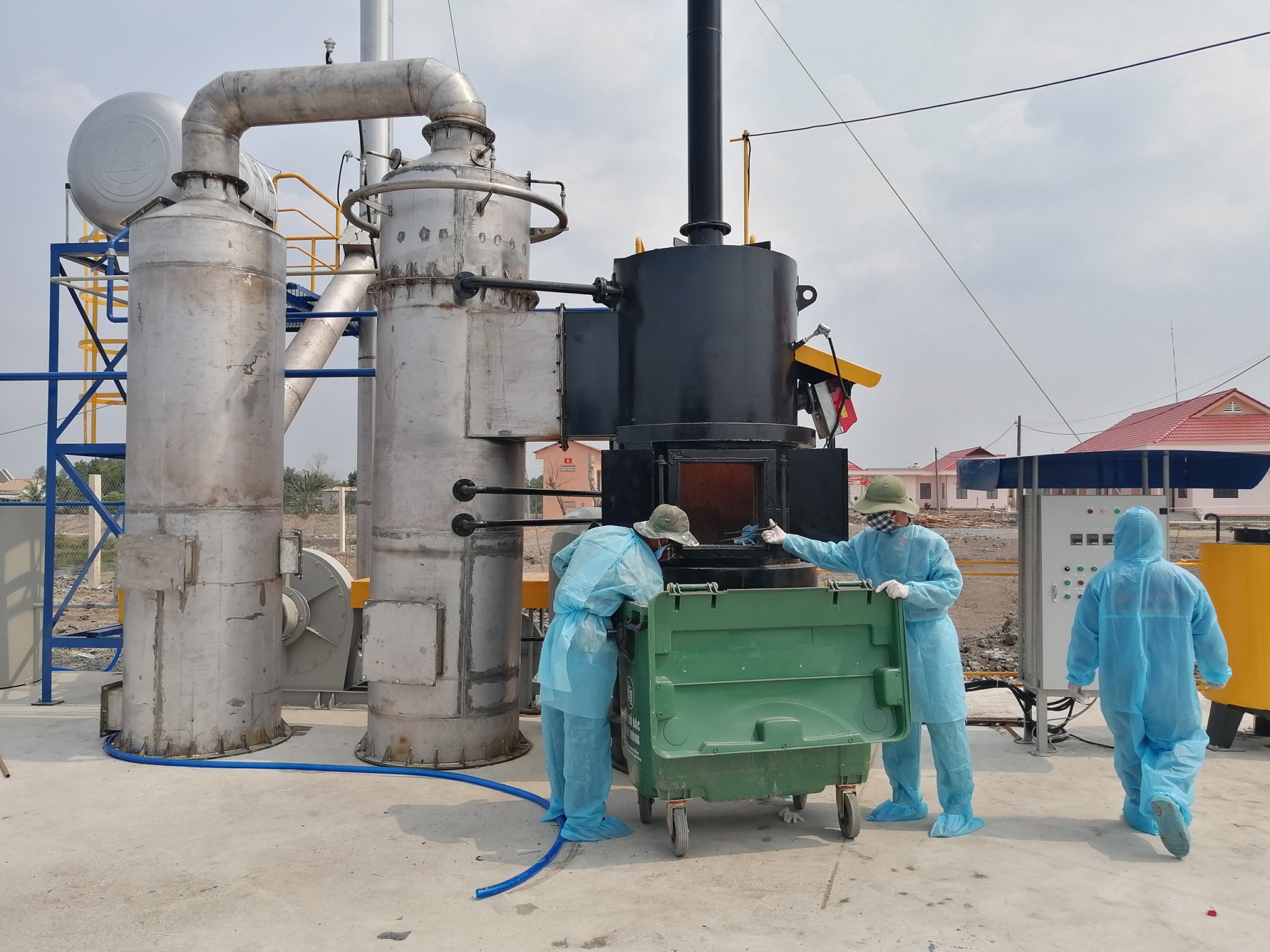
(2) Hospital waste treatment plan
According to the procedure, the garbage disposal in the hospital is clearly and strictly followed from the departments. From management and classification at source to the intervention and monitoring process. May include the following steps:
+ Test the awareness and knowledge of medical staff on how to manage and reduce hazardous waste in hospitals.
+ Evaluate and consider items of materials in use at the hospital.
+ Calculate the volume of waste generated for treatment
Comply with medical waste procedures. Lists of hazardous waste that need to be disposed of
+ Map storage areas, transportation routes in the hospital.
In the process of performing medical waste treatment stages, it is necessary to note the following problems:
+ Dispose of garbage of the wrong color according to the classification at the source.
+ Staff lack of knowledge.
+ Unsatisfactory collection and transportation.
+ Injury during transportation, collection and handling of sharp tools.

Leave a Comment